
Most advice on social ecommerce platforms collapses very different tools into one category. That leads merchants to compare a checkout-enabled marketplace with a creator network, or a live-shopping stack with a discovery channel, then wonder why attribution, margin, and operational ownership become messy later.
That simplification no longer works. Social ecommerce has moved from edge behavior to mainstream retail infrastructure. Independent reporting cited by DHL's social commerce trends coverage says nearly 5 in 10 shoppers worldwide now buy on social media, 67% expect to shop more through these channels by 2030, and the category is expected to be worth about $1 trillion by 2028. For affiliate and performance teams, that means social commerce can't be treated as a soft awareness layer anymore.
The harder question isn't which platform is "best." It's which operating model fits the job. Some platforms own discovery and checkout. Some hand traffic back to the merchant site. Some are really creator-distribution networks with commerce wrapped around them. Some are live-selling infrastructure that lets the merchant keep more operational control. That difference affects attribution, partner recruitment, feed management, fulfillment risk, and how an affiliate or influencer program should be structured.
This comparison looks at ten social ecommerce platforms through that performance lens: merchant model, core workflow, pricing transparency, integrations, ideal use cases, limitations, and implementation risk. It doesn't force a universal ranking because the wrong model can outperform the right one only on paper.
For teams building partner and channel strategy, AffiliateLandscape's ecosystem research can complement this review, and FLYP LTD merch strategy offers additional reading on social commerce operations.
Table of Contents
- 1. TikTok Shop (US)
- 2. Meta Shops (Instagram and Facebook)
- 3. YouTube Shopping
- 4. Pinterest Shopping
- 5. Amazon Live (plus Amazon Influencer storefronts)
- 6. Whatnot
- 7. TalkShopLive
- 8. CommentSold
- 9. LTK (LIKEtoKNOW.it)
- 10. ShopMy
- Top 10 Social Commerce Platforms, Feature & Channel Comparison
- Choose the Commerce Layer That Matches the Goal
1. TikTok Shop (US)
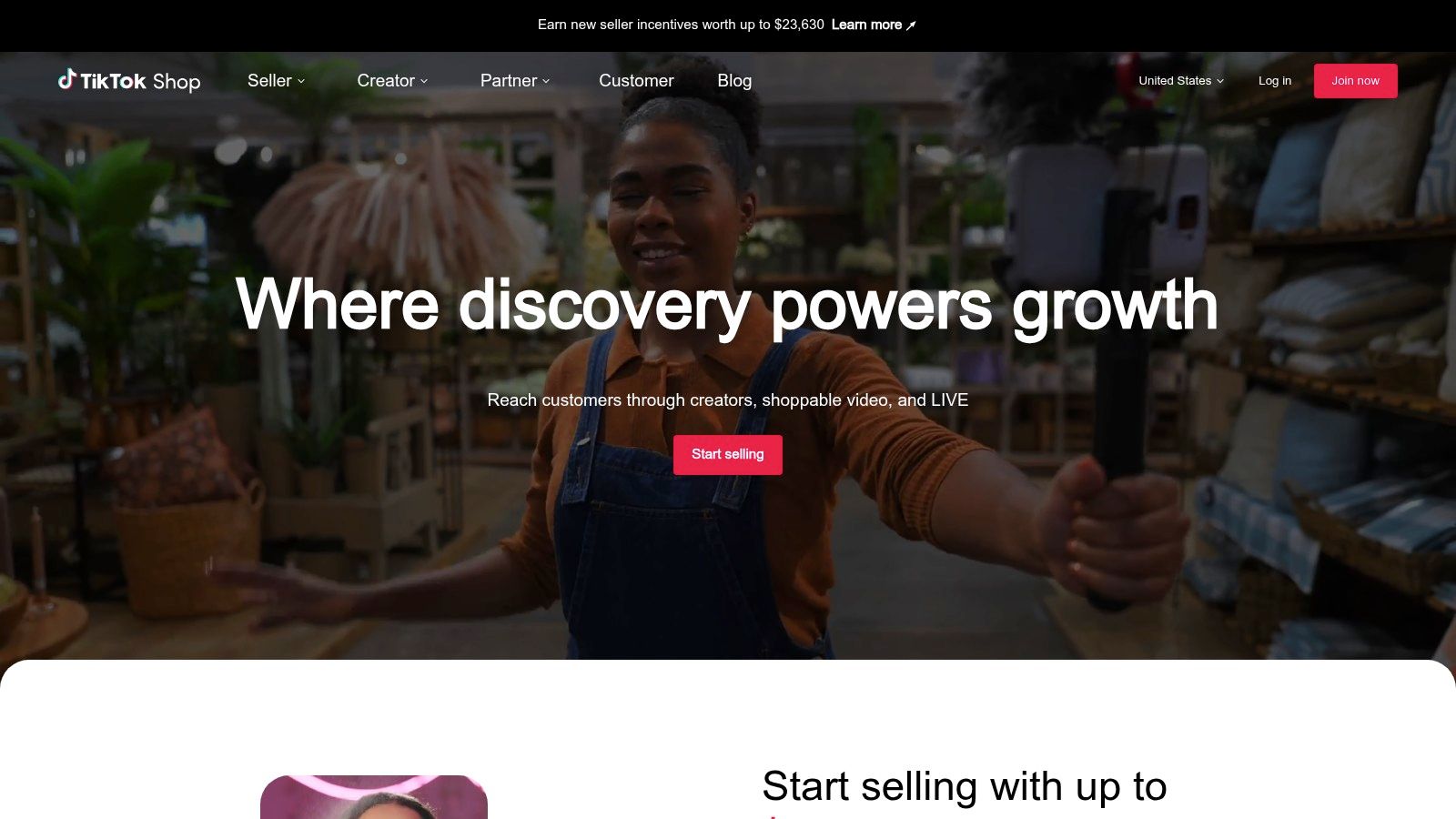
TikTok Shop is the clearest example of a social platform becoming a transaction environment rather than a referral surface. On TikTok, the merchant can move from content to product tagging to checkout inside the same ecosystem, which changes both conversion behavior and tracking responsibility.
That matters because creator distribution isn't an add-on here. TikTok states that its Creator Qualification Criteria for TikTok Shop Affiliate Marketing applies to both sellers and creators, which confirms that TikTok Shop includes a formal affiliate-marketing workflow rather than just native checkout.
Where TikTok Shop fits
TikTok Shop suits brands that can sell through short-form creative, creator demos, and live product storytelling. It is usually strongest where product understanding happens quickly on camera, especially in categories such as beauty, fashion, and collectibles.
The operating model is also unusually compressed. Product discovery, social proof, creator endorsement, and purchase can all happen without a handoff to the merchant site. That can lift conversion efficiency, but it can also reduce the merchant's control over customer data, service flow, and post-purchase relationship compared with owned checkout.
Practical rule: Treat TikTok Shop as both a sales channel and a partner channel. If a team measures only media efficiency and ignores creator payout logic, settlement timing, and catalog governance, reporting will break.
Main trade-offs
- Strongest capability: TikTok Shop Seller Center combines storefronts, in-video tagging, LIVE commerce, and seller operations in one environment.
- Affiliate relevance: The creator-affiliate layer makes TikTok Shop more comparable to a hybrid of social platform, marketplace, and partner channel than to a standard social ad placement.
- Operational risk: Policy changes, moderation decisions, fee handling, and support responsiveness can materially affect day-to-day execution.
- Control trade-off: The easier it becomes to convert in-platform, the less the merchant controls checkout UX and some first-party data flows.
For affiliate managers, TikTok Shop is best treated as a distinct commerce program, not just another placement inside paid social.
2. Meta Shops (Instagram and Facebook)
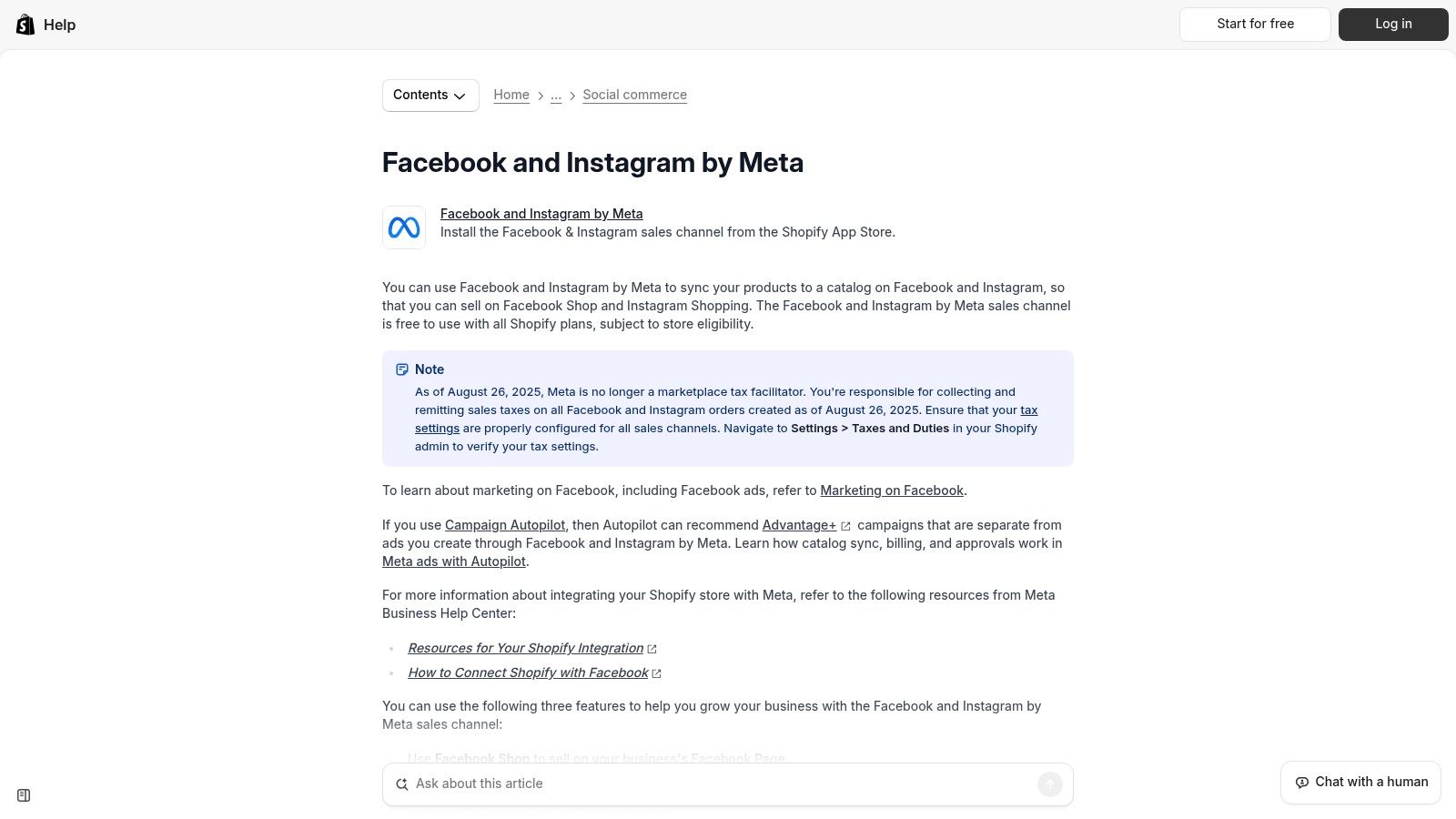
Meta Shops is primarily a merchandising and discovery layer for many US merchants. Instagram and Facebook product tags connect posts, Reels, ads, and catalogs to product pages, while checkout often remains on the merchant's own site. That operating model separates Meta from a closed marketplace such as TikTok Shop.
Its reach still makes the channel relevant. A 2026 industry summary cited by Hootsuite's social media statistics page reports that Facebook remains the leading social ecommerce platform in the United States, with 60.9% of social shoppers having purchased through Facebook and 35% through TikTok. The figures describe audience behavior, not guaranteed performance for an individual catalog.
Where Meta fits the performance stack
Meta suits brands that want publisher distribution without giving up as much control over checkout, customer records, and post-purchase communication. Product tags shorten the route from creator content or paid placement to a product page, while the merchant retains control of cart rules, payment options, analytics, and CRM capture.
That structure supports coordinated programs across paid social, dynamic product ads, and creator partnerships. It also allows affiliate teams to send traffic through trackable product-level destinations rather than treating every social post as a broad awareness asset. Teams building creator programs can use guidance on how influencer marketing platforms connect brands with creators to assess the partner-management layer separately from Meta's distribution tools.
The trade-off is operational rather than purely media-related. Catalog accuracy, event tracking, permissions, policy compliance, and differences between Instagram and Facebook surfaces all affect attribution and maintenance.
- Distribution: Product tagging supports creator-led discovery, paid placements, Reels, and feed content.
- Merchant control: Owned checkout generally preserves more control over site analytics, cart logic, payment choices, and customer data.
- Affiliate fit: Stronger for brands combining creator traffic, product landing paths, and retargeting than for teams seeking a standalone affiliate network.
- Implementation risk: Catalog errors or tracking gaps can weaken reporting even when content generates engagement.
Meta Shops performs best as a merchandising interface connected to the merchant's commerce stack. Its value lies in turning social attention into attributable site traffic, while leaving publishers, affiliates, and the brand to manage distribution and conversion responsibilities across their existing systems.
3. YouTube Shopping
YouTube Shopping is a discovery and creator-commerce layer rather than a marketplace built around rapid feed conversion. It combines shoppable video with search behavior, library content, and creator trust. For affiliate and performance teams, that model favors products requiring explanation, comparison, or repeated exposure over campaigns driven by short-lived trends.
A 2026 overview from Searchlab's social media statistics page projected global social commerce revenue at $1.2T in 2026, up 28% from 2025. It also reported usage concentrated across Instagram, Facebook, and TikTok, alongside a global average order value of $52 for social commerce versus $74 in traditional e-commerce. The difference points to a practical role for YouTube: richer product education can support higher-consideration purchases before the click or checkout.
Why YouTube is structurally different
YouTube Shopping connects commerce to content with a longer useful life. Reviews, tutorials, unboxings, and creator recommendations can continue generating product discovery after publication. Shorts and LIVE add faster formats, but search visibility and an enduring video library remain the platform's main performance advantages.
For eligible merchants and creators, YouTube Shopping support documentation covers product tagging, catalog connections, and shopping features. The operating model therefore combines a content search engine, creator distribution, and a shopping surface. Merchants retain more control over catalog and conversion setup than on a fully native marketplace, while publishers still need reliable links, tagging, and attribution processes.
Main trade-offs
- Best fit: Products that benefit from demos, tutorials, reviews, and search visibility.
- Affiliate relevance: Strong for creator-led attribution when product access sits close to the recommendation.
- Integration effort: Eligibility, catalog synchronization, and approved configurations determine setup requirements.
- Implementation risk: Content can perform without producing attributable commerce if tagging, feeds, or destination tracking are incomplete.
- Maturity issue: Commerce remains secondary to content consumption in YouTube's user experience.
TikTok may suit merchants prioritizing fast trend velocity. YouTube is better suited to durable product education and creator-led demand capture.
4. Pinterest Shopping
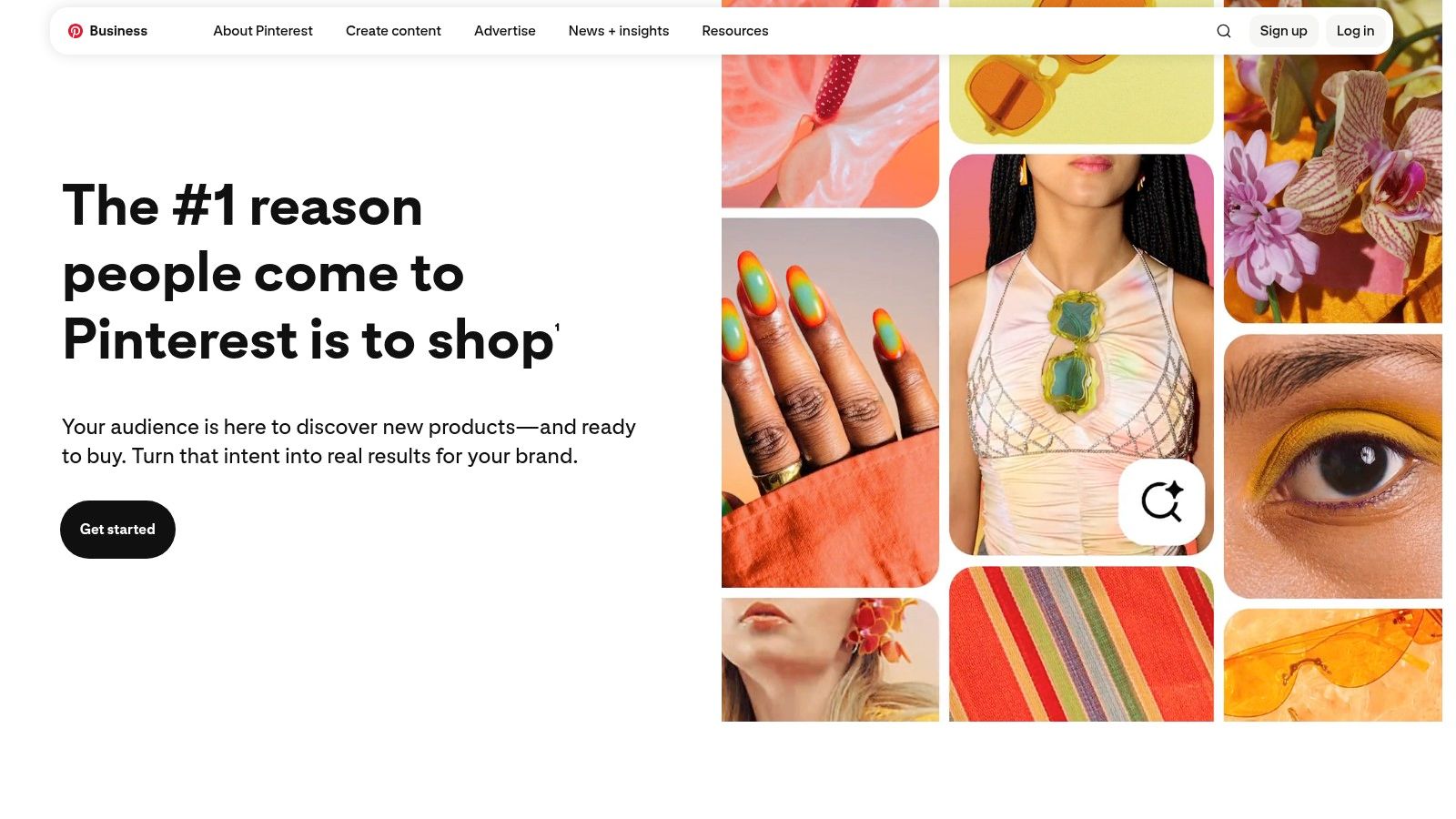
Pinterest Shopping is often grouped with social commerce platforms, but it behaves more like a visual discovery engine that feeds merchant-owned conversion paths. That difference matters for affiliate and performance teams because Pinterest usually supports demand capture and qualified referral flow more than native transaction ownership.
Pinterest's strength is intent that starts before a final product choice. Home, beauty, style, seasonal planning, gifting, and lifestyle projects all fit that pattern. The platform can surface products while users are still refining what they want, which changes both content strategy and attribution windows.
Where Pinterest works best
Pinterest suits brands with strong product imagery, structured catalogs, and landing pages that can close traffic cleanly after the click. It is also one of the better fits for merchants that want social ecommerce exposure without giving up owned checkout.
Because content can keep circulating well after publication, Pinterest can complement affiliates and publishers that build evergreen buying guides, idea boards, and seasonal recommendation content. Product metadata discipline matters here more than short-term virality.
- Merchant workflow: Pinterest Shopping for businesses centers on merchant verification, catalog ingestion, and shopping surfaces tied to merchant destinations.
- Affiliate suitability: Strong for upper-to-mid funnel product discovery that still preserves off-platform measurement options.
- Operational reality: Success depends on feed quality, image standards, and category fit.
- Limit: Brands looking for enclosed checkout or heavy creator-affiliate mechanics won't find Pinterest as native to that model as TikTok Shop or creator networks.
Pinterest is often underrated because it doesn't always look like social selling. For performance teams, that can be an advantage. It gives social discovery without forcing marketplace-style operational dependence.
5. Amazon Live (plus Amazon Influencer storefronts)
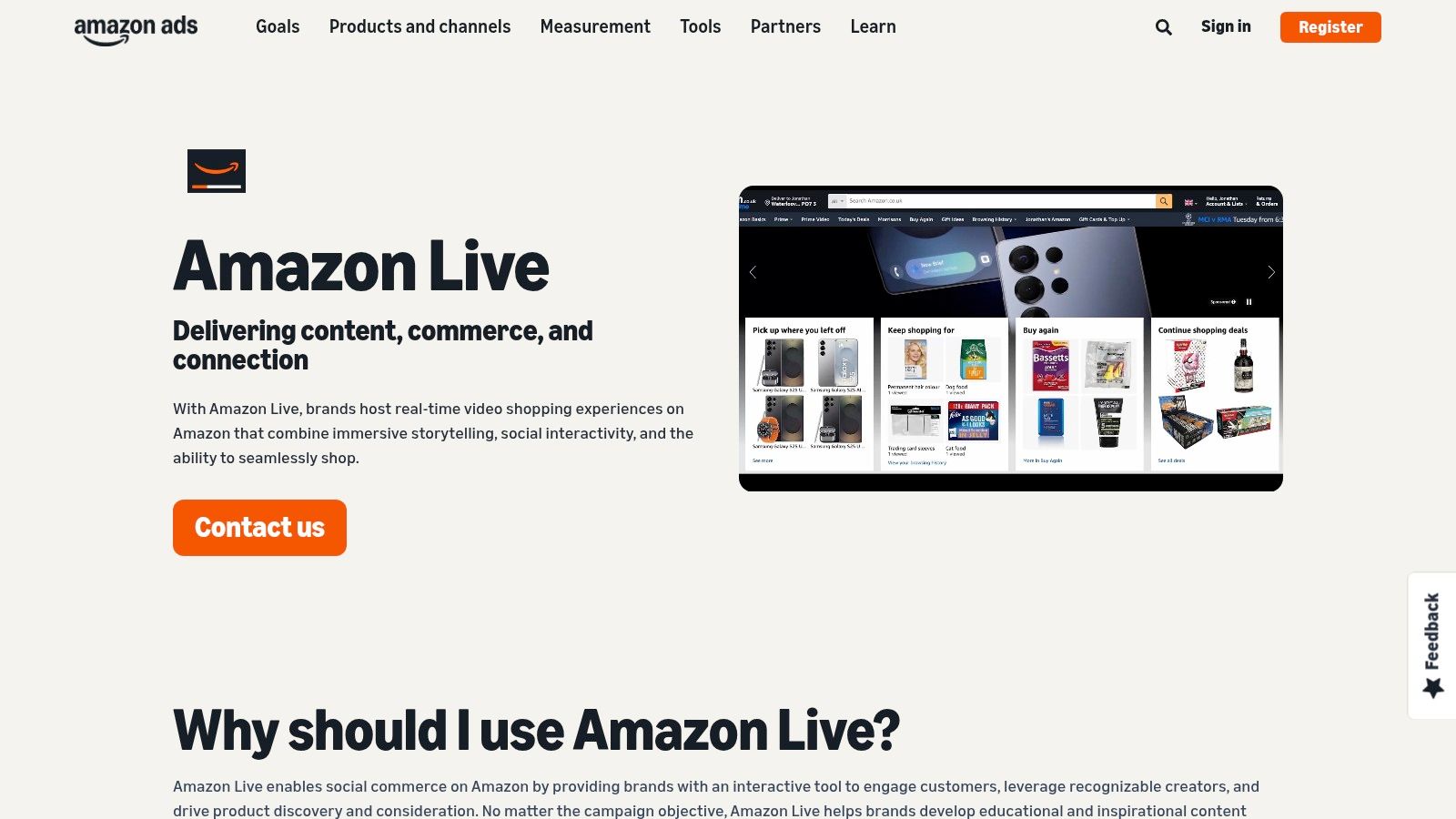
Amazon Live is a marketplace-based live-shopping layer, not a discovery channel comparable to TikTok or Instagram. Inventory, competing offers, fulfillment, and checkout already sit inside Amazon, so the platform can shorten the path from demonstration to purchase while limiting merchant control.
That distinction matters for affiliate and performance teams. A live session can influence shoppers near conversion, but its results are shaped by product detail pages, offer visibility, Amazon traffic, and marketplace rules. External publishers may send demand into the same environment, yet merchants have less control over the customer journey and attribution than on a DTC site.
Where Amazon Live fits
The model suits brands already operating on Amazon, particularly when demonstrations help shoppers evaluate products that are difficult to explain through static listings. Approved influencers extend distribution through recommendation-led content and Amazon Influencer storefronts, giving creators a publisher role within the marketplace rather than sending audiences to an independently owned checkout.
Implementation is therefore less about building a standalone social store and more about coordinating content with Amazon retail operations. Teams should compare its controlled marketplace setting with retail media networks and retailer advertising, especially when assessing media cost, reporting access, and dependence on retailer infrastructure.
- Commerce workflow: Amazon Live connects live content with Amazon inventory and shopping destinations.
- Best fit: Amazon-native brands whose product pages, fulfillment, and marketplace trust can support conversion.
- Affiliate angle: Influencer storefronts provide creator distribution, but publisher activity remains inside Amazon's commercial system.
- Operational risk: Featured Offer pressure, marketplace policies, and restricted customer data can complicate measurement and margin planning.
Amazon Live adds creator-led merchandising to an existing marketplace relationship. It is strongest for conversion support, not merchant-owned audience development.
6. Whatnot
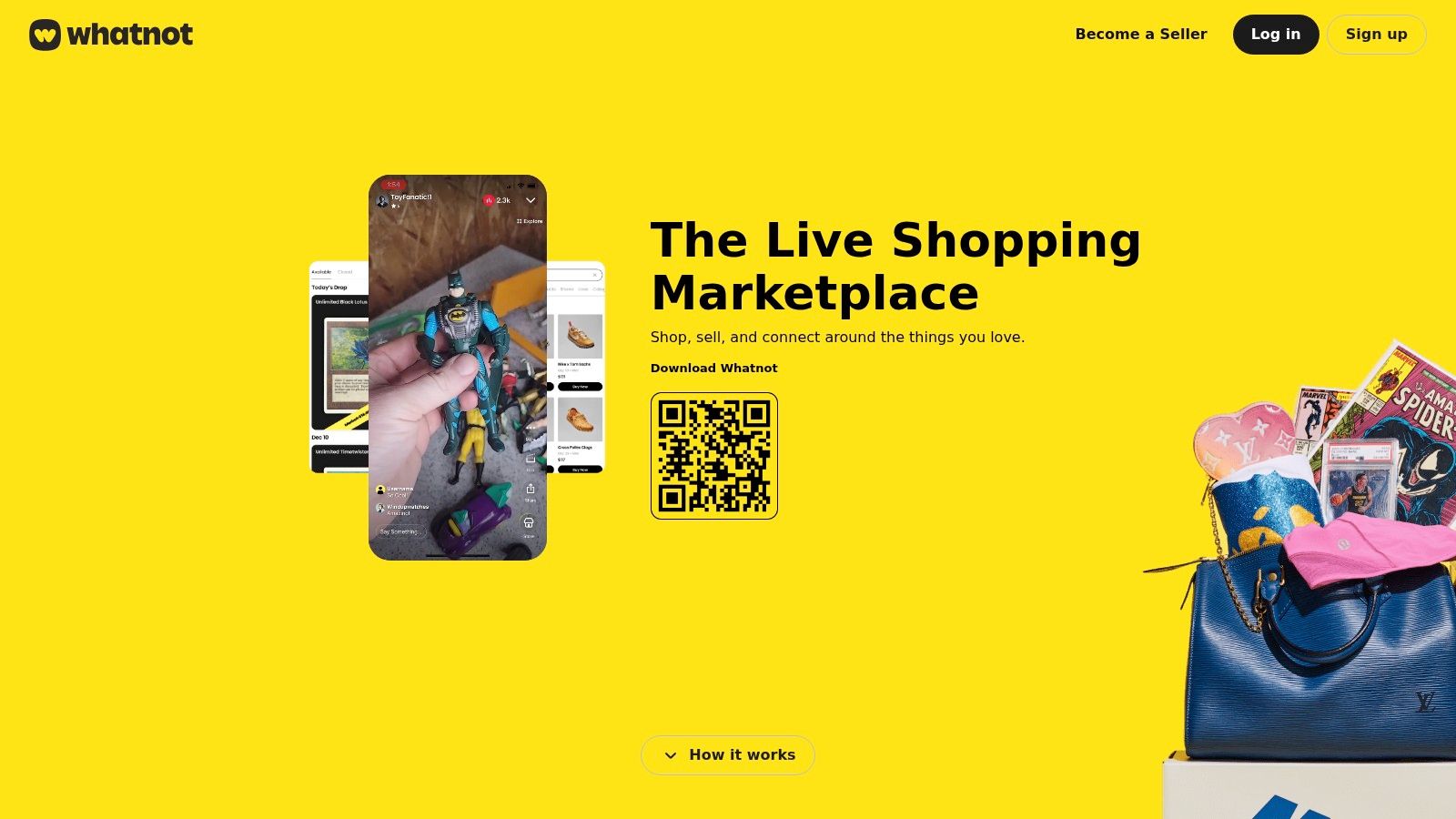
Whatnot is not a broad social commerce utility. It is a category-led live marketplace with community behavior built into the transaction. That makes it a poor fit for many generalist merchants and a strong fit for the right niche.
Its core use case is collector and enthusiast commerce. Auctions, fixed-price listings, host-led selling, and chat all create an environment where community participation is part of conversion, not just pre-sale engagement.
Why category concentration matters
Whatnot works when the product benefits from scarcity, authenticity cues, seller personality, and repeat community attendance. Trading cards, comics, sneakers, vintage, and adjacent verticals fit naturally because buyers often want both inventory access and a sense of event participation.
That also means affiliate-style mechanics look different here. Distribution is less about sending traffic into a universal offer page and more about building seller followings inside a platform-specific ecosystem.
- Seller environment: Whatnot combines live auctions, listings, and in-stream buyer interaction.
- Best fit: Niche categories where live presentation and urgency help buyers decide.
- Commercial trade-off: Commission structures and category economics can materially shape margin.
- Implementation risk: Brands outside Whatnot's native cultures may struggle to create enough audience energy to justify the effort.
Some platforms improve conversion by reducing friction. Whatnot often improves conversion by increasing involvement.
For affiliate professionals, Whatnot is more analogous to a community marketplace with host-driven selling than to a classic publisher network.
7. TalkShopLive
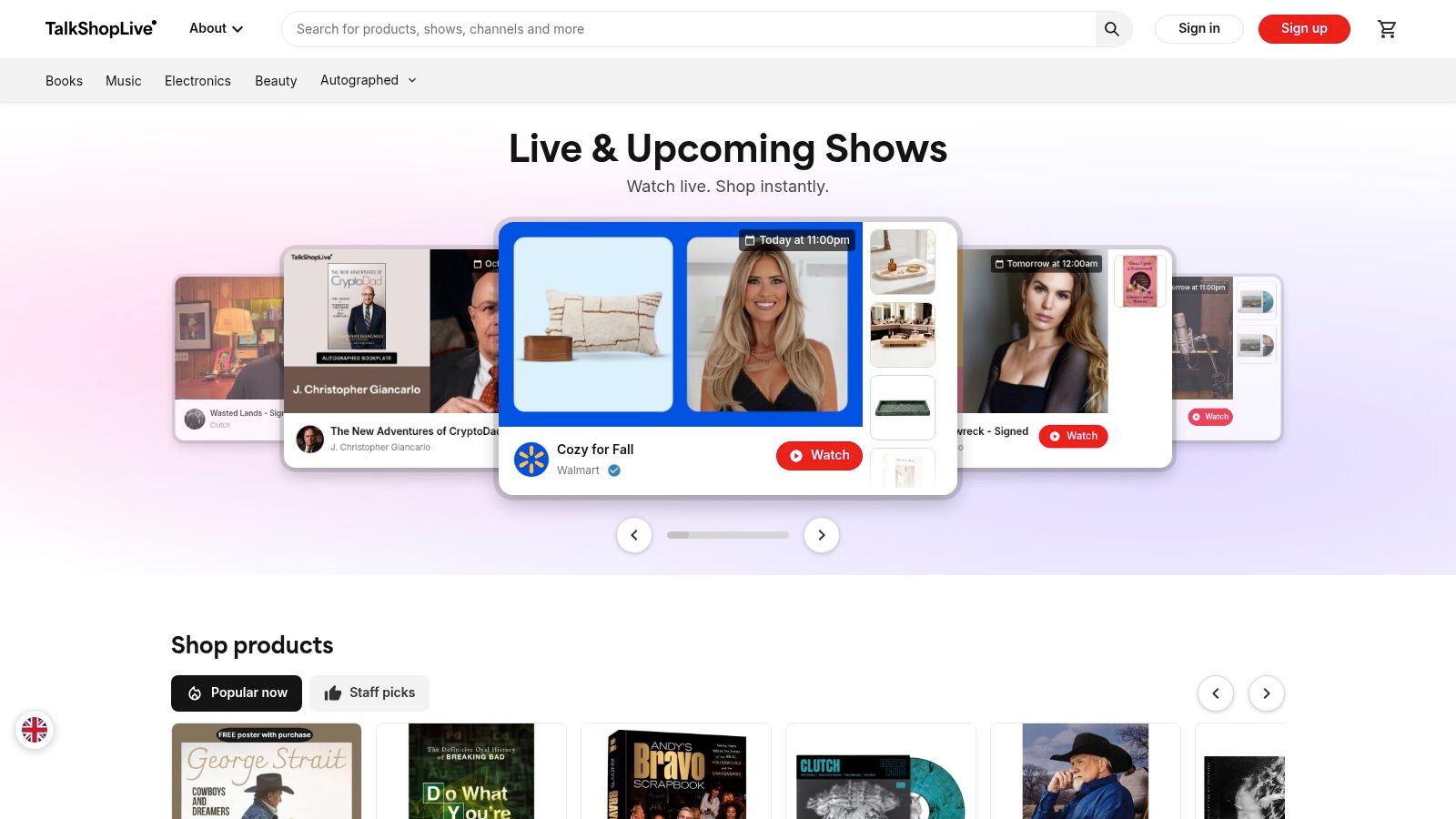
TalkShopLive suits merchants that want live shopping without placing the entire customer relationship inside a marketplace. Its operating model gives brands, publishers, and talent-led programs more control over where product discovery and checkout occur.
The platform distributes shoppable video through embedded players and simulcasts, rather than relying on one social feed. That distinction affects affiliate execution: publishers can host commerce content on their own properties, while creators can direct viewers to event-based buying experiences beyond a single native app.
A practical use case is a product launch, limited drop, or creator-hosted broadcast. The merchant retains a closer connection to its existing commerce operations and can use live video as a conversion layer across campaign pages, partner sites, and publisher channels.
For affiliate and performance teams, the main benefit is distribution flexibility. The main constraint is attribution and traffic generation. TalkShopLive can place the buying experience in more locations, but it does not automatically provide the discovery volume of TikTok Shop, Amazon, or a large social network. Publishers and creators still need to bring qualified audiences, and teams must configure tracking across the relevant destinations.
- Commerce workflow: TalkShopLive provides shoppable video, creator channels, chat, and website embedding.
- Integration angle: Shopify connectivity supports continuity with existing merchant operations.
- Strength: Greater control over the environment where commerce takes place.
- Implementation risk: Distribution, audience acquisition, and cross-site attribution require active management.
TalkShopLive is best assessed as live-commerce infrastructure, not a consumer marketplace. That makes it a useful option for merchants prioritizing owned channels and publisher distribution over built-in discovery.
8. CommentSold
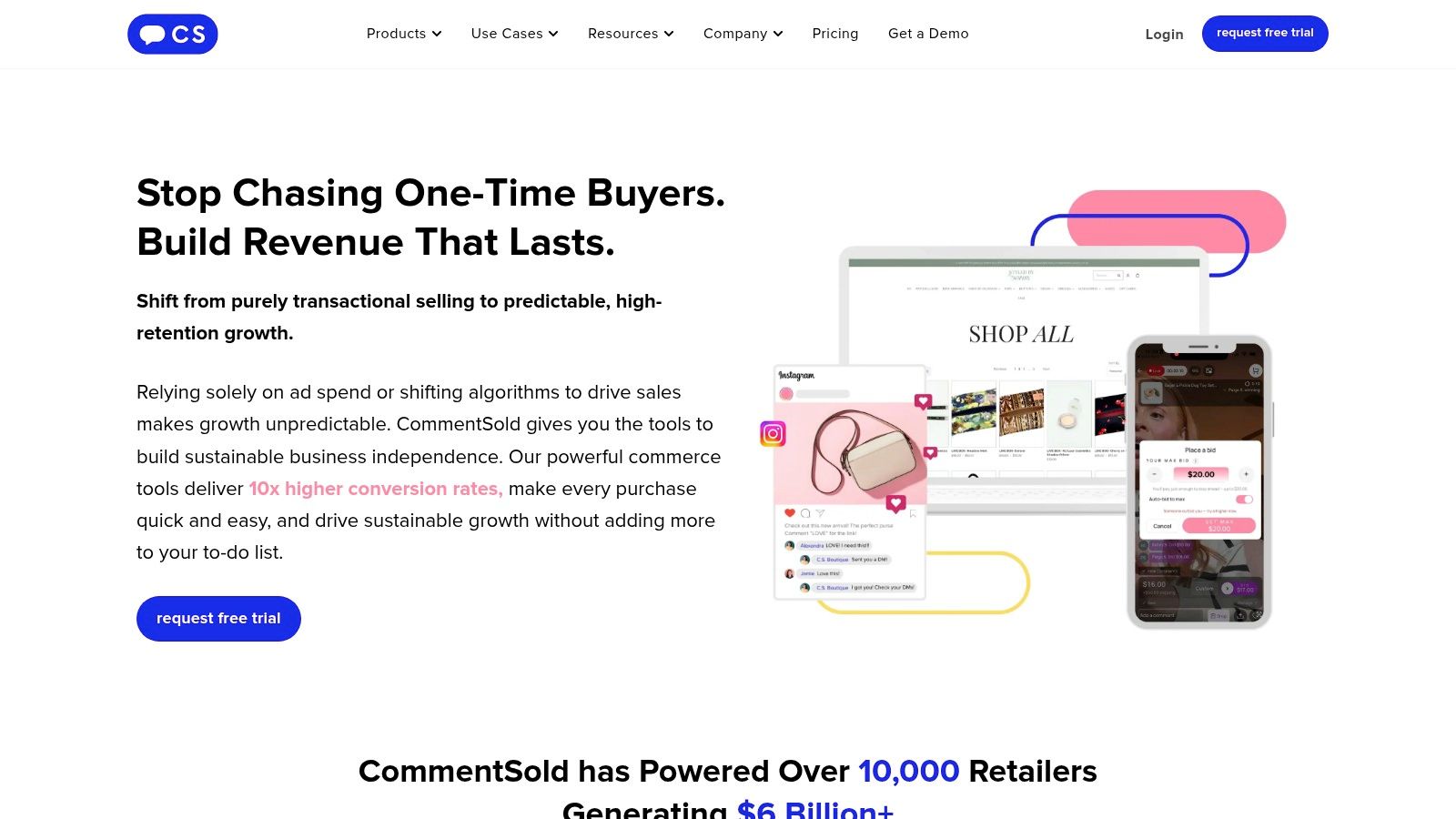
CommentSold sits closer to operations software than to a consumer marketplace. It is built for merchants, especially boutiques and live sellers, that want social selling mechanics tied directly to order management, invoicing, inventory, and fulfillment.
That makes it a very different choice from TikTok Shop or LTK. The value isn't broad consumer discovery on its own. The value is turning social engagement into structured commerce workflows.
Where it works
CommentSold is strongest when selling behavior already centers on live shows, rapid product drops, and comment-based purchase intent. Boutique apparel is the obvious fit, but the broader pattern is any merchant model where hosts sell in real time and the business needs software to convert comments into orders.
Operationally, this can reduce friction in a way that looks small from the outside but matters a lot to margin and staff time. A merchant doesn't need every customer to go through a standard ecommerce flow if the platform can automate carting and invoicing from live interaction.
- Core platform: CommentSold supports comment selling, inventory management, and branded sales surfaces.
- Affiliate relevance: Indirect. This is less about recruiting publishers and more about enabling seller-host conversion mechanics.
- Best fit: SMB live commerce operators with repeat-host selling models.
- Main limitation: Less suited to enterprise partner ecosystems or brands that need broad creator discovery.
CommentSold is a workflow answer more than a channel answer. For some merchants, that matters more.
9. LTK (LIKEtoKNOW.it)
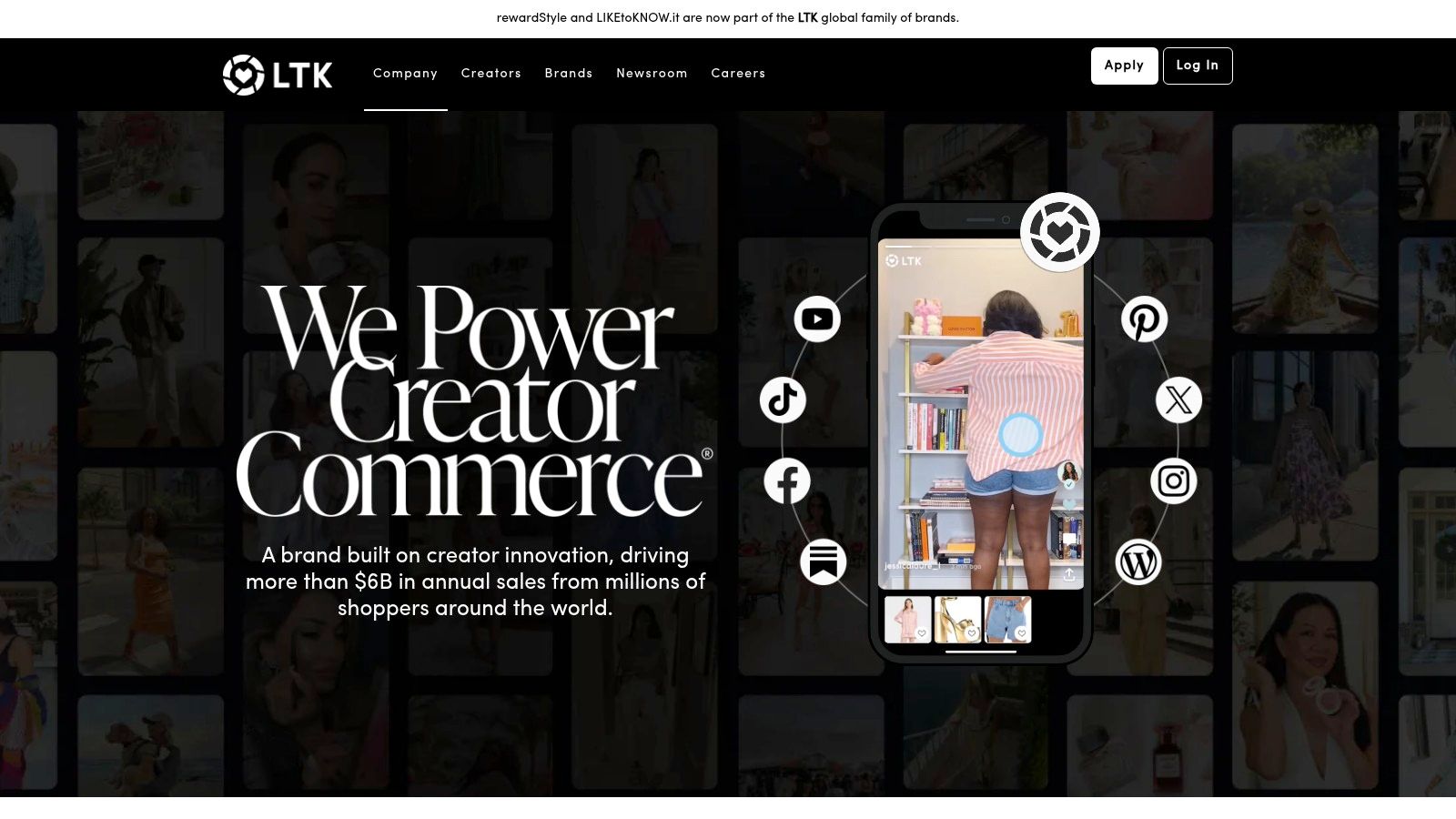
LTK operates as a creator-commerce network built around discovery, curation, and tracked product recommendations. Merchants gain access to creator distribution and merchandising workflows, while purchases typically continue through merchant or retail destinations rather than a platform-controlled checkout.
That operating model gives LTK a different performance profile from native social marketplaces. The merchant can recruit creators and measure recommendation-driven commerce, but must still assess attribution, commission rules, content obligations, and the integration work required across its existing commerce stack.
LTK is most relevant for brands whose creators function as commerce publishers. They can organize products into storefronts, recommend items across channels, and direct audiences toward retailer or merchant pages. The model supports affiliate-style measurement while retaining elements of paid creator collaboration.
Classification can therefore be difficult. Content seeding, sponsored activity, and affiliate payouts may coexist in one program, so teams should define the commercial role and reporting treatment for each activity. AffiliateLandscape's guide to affiliate marketing vs influencer marketing provides useful context for separating those models.
- Platform model: LTK's company site describes creator storefronts, brand tools, and collaboration workflows.
- Performance value: Strongest when creator selection and trackable recommendations need to operate together.
- Merchant control: Brands gain publisher reach, but creators retain meaningful control over presentation, product grouping, and competing recommendations.
- Commercial trade-off: Public pricing transparency is limited, so evaluation generally requires direct discussion with the company.
LTK suits brands seeking creator commerce as an acquisition channel. It is less suitable when the priority is full control over checkout, merchandising, or publisher execution.
10. ShopMy

ShopMy operates in creator commerce rather than as a native social storefront. Its model suits brands that want affiliate-led creator activation, with paid collaboration options available around trackable product recommendations. For performance marketers, that places publisher distribution and commission measurement closer to the centre of the program.
Creators build storefronts and product links. Brands join a marketplace-style environment for creator opportunities, while ShopMy structures recommendations that can generate commissions. The platform therefore supports discovery and conversion through creator networks, but checkout control and customer ownership remain with the connected merchant or retailer.
ShopMy is most relevant when creators are treated as measurable commercial partners rather than extensions of paid media. Affiliate tracking can define the relationship from the outset, giving teams a clearer basis for reviewing traffic, conversions, commissions, and content contribution.
AffiliateLandscape's guide to creator affiliate marketing explains the overlap between affiliate programs and creator partnerships. The practical evaluation question is whether reporting can distinguish affiliate-driven sales from paid-content assistance.
- Platform role: ShopMy provides creator shops, product linking, and brand opportunity workflows.
- Best fit: Premium DTC and retail brands seeking commission-led creator distribution.
- Commercial caveat: Public brand pricing is not fully transparent, so teams should verify current terms directly with ShopMy.
- Implementation risk: Paid placements, gifted products, affiliate commissions, and content rights need separate rules. Without them, channel reporting can merge distinct costs and outcomes.
ShopMy works as a creator-partner operating layer, not a replacement for a social storefront. Its value depends on publisher fit, attribution design, merchant integration, and the team's ability to govern overlapping collaboration models.
Top 10 Social Commerce Platforms, Feature & Channel Comparison
| Platform | Core offering | Key features | Target audience | Strengths (USP) | Price / fees |
|---|---|---|---|---|---|
| TikTok Shop (US) | Native in‑feed & LIVE social commerce with on‑platform checkout | Product tagging, Shop tab, creator/affiliate programs, fulfillment | DTC brands, beauty/fashion, creators | Algorithmic discovery; large creator network; scale for short‑form video | Seller & fulfillment fees; platform commissions vary |
| Meta Shops (Instagram & Facebook) | Catalog‑driven storefronts for discovery and tagging (US: off‑platform checkout) | Product tagging in Feed/Reels/Ads, Shop surfaces, cart handoff to merchant | Brands using paid social and retargeting | Massive reach and ad targeting; strong catalog workflows | Ad spend + platform fees; native checkout deprecated in US |
| YouTube Shopping | Shoppable long‑form, Shorts and LIVE with tagging and integrations | Tagging across videos/Shorts/LIVE; Shopify catalog sync; bulk tagging tools | Creators and brands leveraging search and long‑form content | Combines search longevity with creator trust; native shopping UI | Merchant eligibility required; standard platform/merchant fees |
| Pinterest Shopping | Visual discovery engine turning catalogs into shoppable Pins | Catalog ingestion, rich Pins, Pinterest Tag, merchant verification | Lifestyle, home, beauty, CPG brands | High purchasing intent; evergreen content with compounding reach | Ad-driven; primarily off‑site checkout (fees via ads/traffic) |
| Amazon Live (+ Influencer storefronts) | Live shoppable video inside Amazon storefronts and PDPs | Shoppable live carousel, live chat, placement on PDPs & Fire TV | Brand Registry sellers, vendors, approved influencers | Commerce at point‑of‑purchase with Prime logistics; AMC measurement | Amazon seller/vendor fees and eligibility; commissions apply |
| Whatnot | Live auction & marketplace focused on collectibles and niche verticals | Live auctions, fixed listings, community chat, category specialization | Collectors, niche sellers (cards, comics, sneakers) | Purpose‑built live UI; high engagement and repeat buyers | Tiered commission structure; rates vary by category |
| TalkShopLive | Embeddable shoppable video + simulcast for events and drops | Simulcast/embed players, integrated chat, Shopify sales channel | Brands, publishers, celebrity/creator retail events | Multi‑embed keeps orders in merchant stack; good for events/preorders | Platform fee added on top of pricing; subscription/transaction fees |
| CommentSold | Comment‑selling and live commerce ops platform for SMBs | "SOLD" automation, unified orders/inventory, branded app/Popclips | Boutiques and small apparel sellers running social LIVEs | Operational stack tailored to SMB live sellers; reduces checkout friction | Subscription + sales commission component |
| LTK (LIKEtoKNOW.it) | Large creator‑commerce network with shoppable creator storefronts | Creator storefronts, Brand Platform, AI creator matching, analytics | Lifestyle/fashion brands and large creator networks | Large buyer base; robust creator tools and reporting | Brand pricing/tiers private; paid collaborations and platform fees |
| ShopMy | Creator‑commerce platform with affiliate tracking & paid marketplace | Creator shops, link‑level commission tracking, "Opportunities" marketplace | Premium DTC, retail brands, lifestyle/beauty creators | Affiliate‑first with paid collab marketplace; creator discovery | Pricing not fully public; reported ~$399/mo entry (verify) |
Choose the Commerce Layer That Matches the Goal
The strongest social ecommerce platforms don't all solve the same problem. That is the main mistake in most comparison pieces. A brand looking for native checkout velocity should not evaluate tools the same way as a brand trying to preserve owned checkout, recruit creators, or run live commerce through a publisher network.
For small brands with limited operational bandwidth, the easiest starting points are usually the platforms that already combine discovery, merchandising, and transaction mechanics. TikTok Shop is the clearest example when the product can sell through short-form creator content. CommentSold can also make sense for boutique-style sellers whose business already revolves around live shows and fast-moving drops. Both reduce the amount of custom infrastructure the merchant must assemble, but both also create operational dependence on platform-specific rules and workflows.
For brands already invested in marketplaces, Amazon Live fits best when the goal is to improve merchandising where inventory and fulfillment already exist. It is not the best choice for customer ownership, but it can be efficient when a team accepts Amazon as the core commerce destination. Whatnot belongs in a narrower category. It is strongest for niche communities where auctions, host personality, and repeat participation are part of the product experience itself.
For owned-checkout control, Meta Shops and Pinterest Shopping are usually stronger than enclosed marketplace models. They help merchants merchandise products inside major discovery environments while preserving more of the site-side conversion stack. YouTube Shopping sits between those worlds. It can support in-platform shopping features, but its real strategic value often comes from combining content longevity, creator trust, and search behavior.
For creator discovery and affiliate-style partner distribution, LTK and ShopMy deserve separate treatment from native social channels. They are not checkout environments first. They are creator-commerce operating systems. LTK is often better suited to brands that want broad creator discovery and campaign structure across storefront-driven recommendation behavior. ShopMy is especially relevant when a merchant wants creators to operate in an affiliate-first model with paid collaboration options around that base.
Live-shopping infrastructure is its own decision. TalkShopLive is often the more interesting option for teams that want live commerce without surrendering everything to a marketplace or closed social app. It suits merchants, publishers, and talent-led campaigns that need shoppable video distributed across owned or partner surfaces. That can reduce platform risk, but only if the team already has a realistic distribution plan.
The evidence also points to a broader measurement issue that buyers shouldn't ignore. Deloitte Digital's State of Social research for 2025 says 96% of social-first brands view social commerce as a high or very high priority, yet only 39% say it is delivering high ROI. Deloitte also found that social-first brands derive 14.4% of B2C revenue from social commerce versus 10.5% for low-maturity brands. The useful conclusion isn't that social commerce underperforms. It is that operating maturity, attribution design, and channel fit matter more than feature checklists.
A practical rollout sequence helps avoid the usual mistakes:
- Define the conversion destination: Decide whether the sale should happen in-platform, on the merchant site, or inside a marketplace.
- Audit catalog and tracking requirements: Confirm product feeds, product IDs, attribution tags, creator links, and reporting handoffs before launch.
- Select creators or publishers carefully: Match partner type to platform logic. Creator-commerce networks and live marketplaces need different partner behaviors.
- Test a limited product set: Start with products that have clean margins, simple fulfillment, and clear creative angles.
- Reconcile platform and site reporting: Don't assume in-platform sales data and owned analytics describe the same outcome.
- Document policy and fulfillment responsibilities: Customer service, shipping, returns, creator disclosures, and moderation risk need named owners.
- Scale only after margin is clear: Gross sales can hide weak economics when creator payouts, marketplace fees, and service overhead stack up.
For independent research beyond any single article, AffiliateLandscape can help readers review relevant categories across platforms, publishers, agencies, and partner technologies. That matters here because social ecommerce rarely succeeds as a standalone feature choice. It succeeds when the merchant aligns the channel model, partner model, and measurement model before scale.
Affiliate Landscape helps performance marketers research the companies, tools, partner types, and ecosystem categories behind strategies like social commerce, creator affiliate programs, retail media, and platform-based selling. Teams comparing social ecommerce platforms can use it to explore adjacent partners, from creator platforms and affiliate tech to agencies, publishers, and commerce infrastructure providers.
Ready to explore the affiliate landscape?
Discover networks, tools, and opportunities in our directory.
Explore Directory