
The popular advice is wrong: a marketing automation agency shouldn't be selected because it can produce attractive email sequences or operate a familiar CRM. Those capabilities are table stakes. The true question is whether the partner can redesign the operating model behind acquisition, qualification, handoff, retention, reporting, and compliance.
That distinction matters in affiliate and performance marketing, where merchants, publishers, networks, agencies, tracking providers, and technology platforms exchange data across multiple systems. A workflow that merely sends a message is easy to build. A workflow that keeps consent, lead status, attribution, partner activity, and sales action synchronized is an operating system. Buyers evaluating agencies and technology providers through AffiliateLandscape should assess that system, not the surface-level campaign output.
Table of Contents
- Redefining the Marketing Automation Agency
- Core Services and Technical Integration Depth
- Evaluating Pricing Models and Engagement Structures
- The Implementation and Compliance Checklist
- Navigating AI and Privacy-First Automation Trends
- Drafting the Agency Brief and Verification Targets
Redefining the Marketing Automation Agency
A traditional agency brief asks for campaign production, list management, and email scheduling. That brief is obsolete for any organization with a complex funnel, multiple acquisition channels, or a meaningful partner ecosystem. The modern agency must connect customer behavior to commercial action, then give marketing, sales, finance, and client services a shared version of events.
The market supports that shift. One independent estimate places the global marketing automation software market at USD 6.65 billion in 2024, with a projection of USD 15.58 billion by 2030 and a 15.3% CAGR from 2025 to 2030. The forecast is published by Grand View Research, which attributes expansion to digitalization, internet penetration, and mobile-device usage. Those forces create more journeys, more channels, and more data handoffs for agencies to manage.
A separate forecast estimates growth from USD 47.02 billion in 2025 to USD 81.01 billion by 2030, at an 11.5% CAGR, according to MarketsandMarkets. Its use cases include campaign management, analytics, lead generation, content management, acquisition, retention, brand positioning, and upselling. The estimates use different methodologies, but they point to the same commercial reality: automation has moved beyond email into revenue operations.
The operating-model test
A capable partner should be able to answer questions such as:
- Who owns the customer record? The CRM, ecommerce platform, affiliate platform, or a data warehouse must have a defined authority.
- What changes lifecycle status? A page visit, form submission, partner referral, sales qualification, purchase, refund, or consent withdrawal should have an explicit meaning.
- How does a handoff occur? Qualified leads need routing rules, ownership, deadlines, and escalation paths.
- How is value measured? Reporting must connect workflow participation with pipeline, purchases, retention, or partner economics.
- What happens when data fails? Every important automation needs monitoring, exception handling, and a human recovery path.
The distinction between execution and architecture is becoming more important as agencies face pressure from AI, internal team growth, and consolidation. Industry coverage citing a Forrester-linked forecast says 15% of agency jobs could be eliminated in 2026 because of automation and efficiency pressures, as reported by Marketing-Interactive. That doesn't mean brands should eliminate external partners. It means buyers should stop paying premium fees for work software can execute reliably.
Practical rule: Hire an agency to solve coordination, governance, measurement, and change management. Don't hire one merely to press the send button.
The strongest partners will combine platform configuration with process redesign. They'll document how affiliate referrals enter the CRM, how duplicate contacts are handled, how sales receives qualified opportunities, how suppression travels across systems, and how revenue attribution is reconciled. A useful overview of AI agents for agency workflows can help buyers identify which repetitive agency tasks are candidates for controlled automation, but the agency still owns the operating design and safeguards.
Affiliate and performance marketing teams should also read the role of agencies in an AI-driven marketing landscape before writing a vendor brief. The agency's value is shifting toward architecture and accountability, not disappearing.
Core Services and Technical Integration Depth
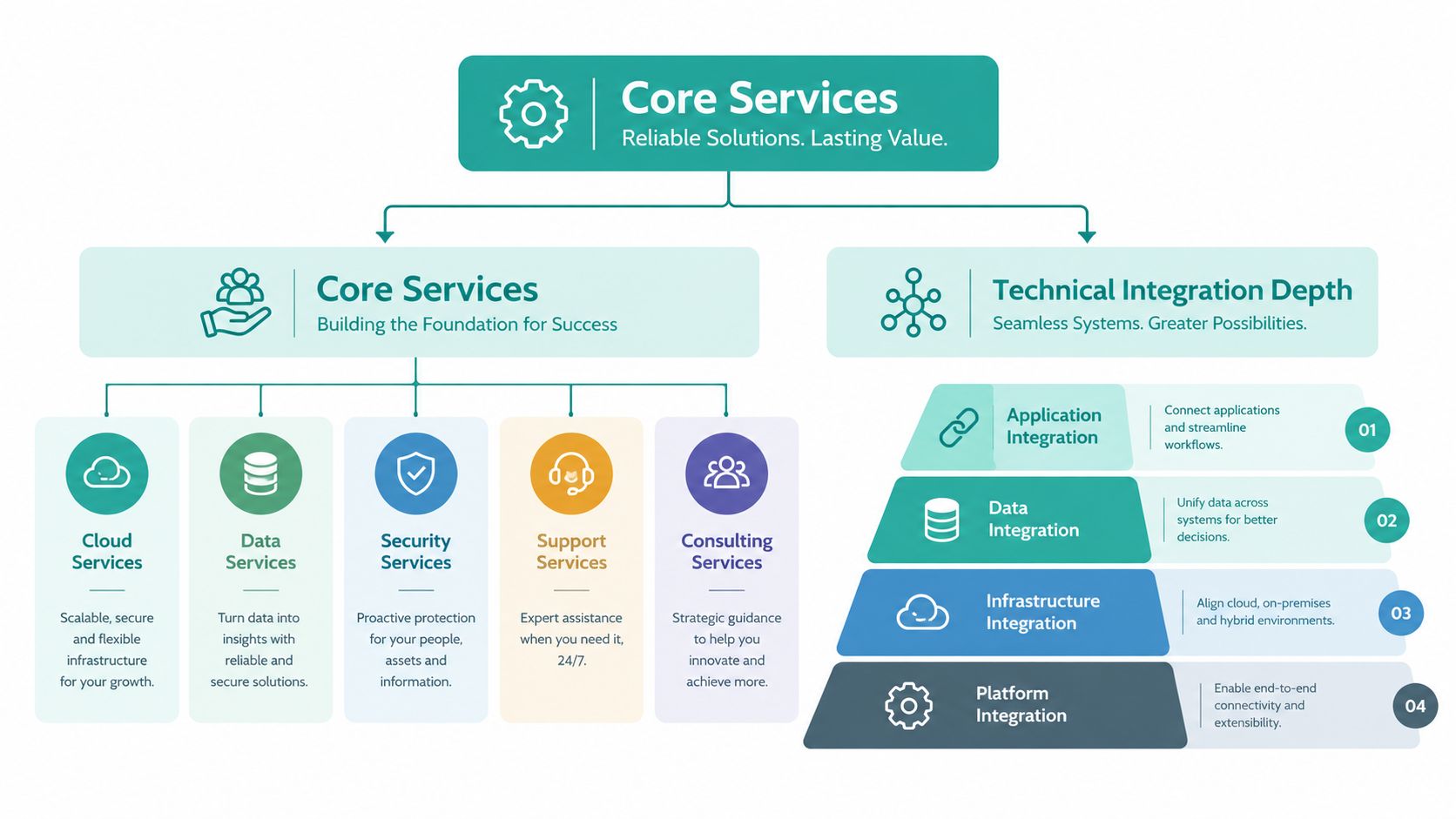
A service menu tells a buyer very little. “Email automation,” “lead nurturing,” and “CRM management” can describe anything from a few scheduled messages to a synchronized system that routes opportunities and records the complete customer journey. Technical integration depth is the meaningful differentiator.
What the agency should actually deliver
A serious engagement usually includes several connected workstreams:
Data and system architecture. The agency maps CRM objects, lifecycle fields, consent states, partner identifiers, campaign parameters, purchase events, and ownership rules. It should show where each field originates and which systems can update it.
Bidirectional CRM integration. Native synchronization is preferable where it supports the required objects and events. If a connector only copies contacts in one direction, the agency must explain how sales outcomes, status changes, opt-outs, refunds, and revenue events return to the automation layer.
Lead scoring and routing. Scoring should reflect both fit and behavior. A high-intent action from an unsuitable account shouldn't receive the same treatment as a buying signal from a target account. Routing must assign ownership, create tasks, notify the right team, and define what happens when nobody acts.
Lifecycle orchestration. Journeys should respond to events rather than rely on arbitrary calendar sequences. A purchase should suppress acquisition messaging. A refund should change retention treatment. A partner referral should preserve source information through qualification and conversion.
Channel coordination. Email, web, SMS, paid media, CRM tasks, and partner communications need shared suppression and segmentation logic. Separate channel teams shouldn't send conflicting messages because they work from different audience definitions.
Deliverability and compliance management. Hard bounces need automatic suppression. Engagement signals should influence audience eligibility. Consent withdrawal must propagate across connected platforms instead of remaining trapped in one list.
The CRM and marketing automation integration guidance from Act-On emphasizes the importance of native CRM sync, bidirectional field mapping, and event-based triggers. Those controls enable closed-loop execution, where lead status and engagement history stay synchronized without manual reconciliation.
How to audit technical depth
Ask the agency to demonstrate a workflow in a sandbox or controlled test account. The demonstration should include a new lead, a duplicate record, a qualification event, an ownership change, an unsubscribe, a hard bounce, and a conversion. Buyers should watch the data move through every system and inspect the resulting audit trail.
A partner that only shows a polished email builder is avoiding the difficult part. A partner that can explain error handling, retry behavior, field conflicts, data latency, permissions, and rollback procedures understands operational risk. Fluidwave's integration guide offers useful context for assessing integration capabilities before a technical discovery call.
For affiliate teams, the test should include the partner or publisher identifier. If the agency can't preserve referral context from click or conversion through CRM and revenue reporting, the automation may improve activity while weakening attribution. The relevant ecosystem context is covered in Martech platforms explained, which helps separate orchestration platforms from specialist tools and service providers.
The agency's deliverable shouldn't be a collection of disconnected workflows. It should be a documented system with naming conventions, ownership, event definitions, monitoring, and a clear relationship between automation activity and business outcomes.
Evaluating Pricing Models and Engagement Structures
Pricing is a design decision, not an administrative detail. The wrong commercial model encourages the agency to produce visible activity rather than remove operational friction. Buyers should compare the fee structure with workflow complexity, internal capability, data risk, and the amount of ongoing optimization required.
| Pricing Model | Best Use Case | Hidden Costs and Risks |
|---|---|---|
| Retainer | Continuous strategy, optimization, reporting, and stakeholder support | Unused capacity, vague deliverables, and incentives to preserve recurring work |
| Project-based | Defined migration, implementation, integration, or journey build | Change requests, weak post-launch ownership, and incomplete handover |
| Performance-tied | Mature programs with trusted attribution and controllable conversion paths | Disputes over causality, delayed payouts, and pressure to favor measurable actions over necessary infrastructure |
| Managed service | Teams needing ongoing platform administration, monitoring, QA, and compliance support | Platform fees, usage-based charges, overages, and dependency on the provider |
| Hybrid | A defined implementation followed by measured operational support | Complex contracting, unclear boundaries, and duplicated fees if scope isn't explicit |
Retainers reward access, not always outcomes
A retainer works when the agency has a recurring operating role. That can include workflow monitoring, reporting, testing, stakeholder training, and governance. It works poorly when the scope consists of a small set of repeatable builds that the internal team could own after documentation.
The contract should specify response expectations, included workflow changes, reporting responsibilities, platform administration, data remediation, and emergency support. “Strategic support” isn't a measurable deliverable unless the agreement defines what the agency produces and how the client accepts it.
Projects need a real exit plan
Project pricing suits migrations and implementation work, but the handover must be treated as a deliverable. The buyer should receive architecture diagrams, field dictionaries, workflow logic, test evidence, permission records, failure alerts, and training materials. Without those assets, the client has purchased configuration without ownership.
Scope control matters too. Integration discovery often exposes legacy data problems, inconsistent lifecycle definitions, and unapproved consent states. The contract should explain how those findings are priced, prioritized, and approved rather than allowing every issue to become an unexpected change order.
Performance fees require mature measurement
Performance-linked compensation sounds aligned, but attribution is rarely neutral. The buyer must define the conversion event, reporting window, exclusions, returns, cancellations, assisted conversions, partner influence, and treatment of branded demand. A connected ecommerce report may count only purchases made within seven days after an automation email or campaign, by a contact who received and engaged with the message, as described in ActiveCampaign's Marketing Revenue report. That narrow rule illustrates why both parties need a written attribution definition.
The commercial model should also account for platform licensing, contact volume, connector usage, data enrichment, deliverability tools, analytics, and internal review time. A low agency fee can still produce a high total cost of ownership if the implementation creates manual reconciliation or requires several overlapping subscriptions.
The cheapest proposal is often the one that hides the most client-side work.
Before a selection committee approves an agency, it should model the full cost of implementation, operation, governance, training, and exit. If the stack or service package is configurable, buyers can choose your plan only after mapping requirements to actual usage, permissions, and reporting needs.
The Implementation and Compliance Checklist
Automation implementation should be managed like an engineering project. Creative assets matter, but they can't compensate for unreliable identity resolution, broken consent propagation, or unclear ownership. The agency should establish the control environment before building elaborate journeys.
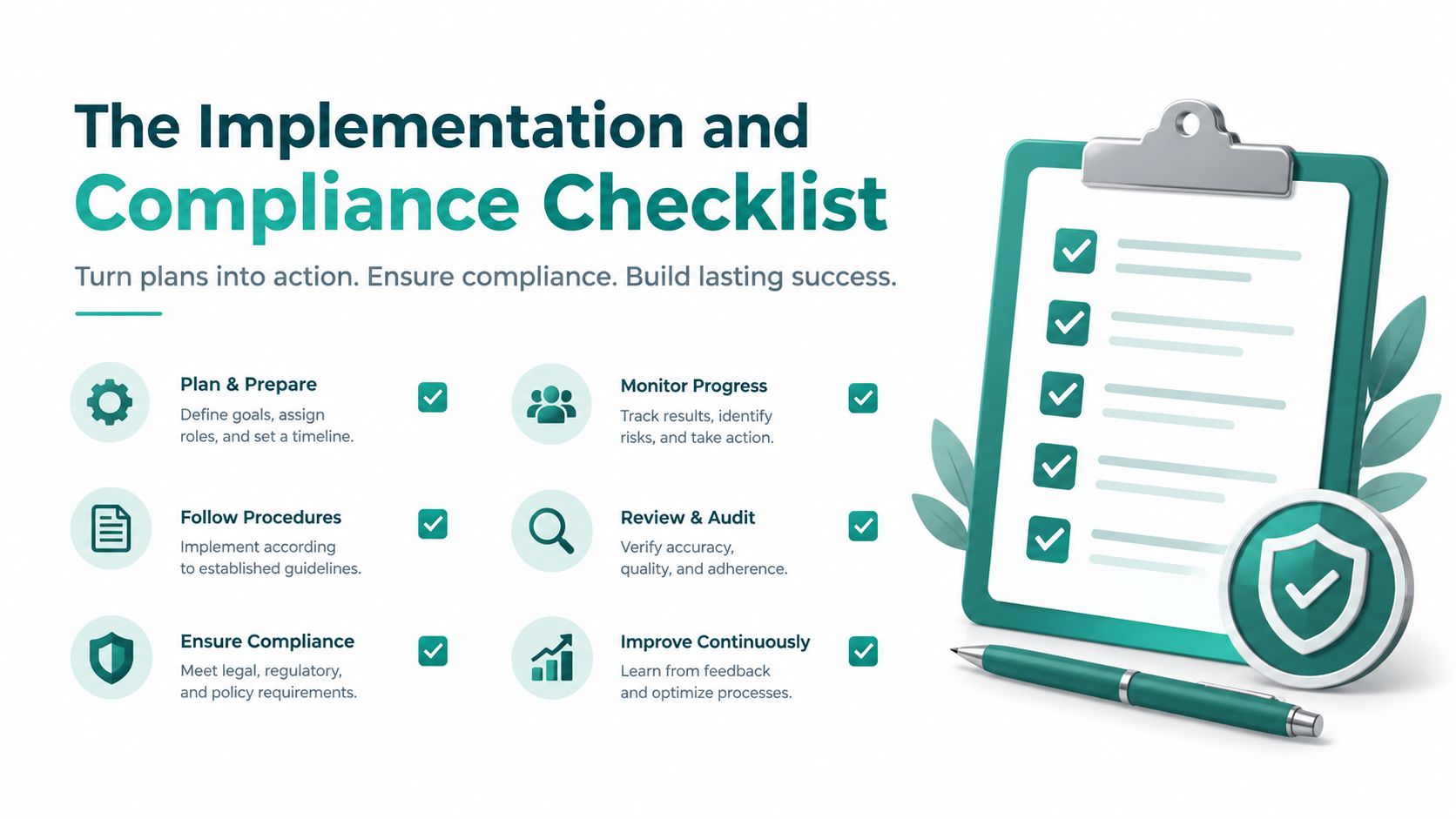
Step one, map the operating process
Document every handoff from acquisition to revenue. Include merchant lead capture, affiliate referral data, publisher source, network status, CRM creation, qualification, sales acceptance, purchase, refund, and retention treatment. Each handoff needs an owner, an event, a destination, and an exception path.
Don't begin with the software screens. Begin with the decisions the business needs the system to make.
Step two, establish data rules
Create a field dictionary covering definitions, formats, allowed values, source systems, update permissions, and retention requirements. The agency should identify duplicate logic, inactive records, missing consent, conflicting lifecycle values, and unowned accounts before activation.
A clean data model prevents a common failure: several systems each appear accurate in isolation, while the combined customer record is contradictory.
Step three, baseline the work
Time recurring workloads before launch. That includes reporting, status updates, invoicing inputs, pipeline reviews, list preparation, campaign QA, and manual data reconciliation. Record the current lead response process and the time required to deploy a campaign.
These baselines make process compression visible. They also stop the agency from claiming success because a workflow launched, even if staff still perform the same work elsewhere.
Step four, synchronize consent and suppression
Opt-outs should propagate between the CRM and email systems within minutes, according to the operational guidance summarized in the verified benchmark material. Hard bounces should automatically suppress future sends, and low-engagement contacts should move away from broadcast traffic to protect sender reputation and inbox placement.
The agency should test these controls with real records in a restricted environment. A consent state that updates eventually isn't sufficient when another platform can send before the update arrives.
Step five, test failure paths
A competent QA plan covers missing fields, duplicate contacts, invalid event values, delayed webhooks, failed API calls, reassigned owners, bounced messages, withdrawn consent, refunds, and partial workflow completion. Each failure needs an alert and a recovery owner.
The test should verify not only that an action occurs, but that the system records why it occurred. Auditability matters for compliance, troubleshooting, partner disputes, and client reporting.
Step six, verify the first operating cycle
The agency should run a controlled launch, compare output with the baseline, inspect suppression logs, review routing accuracy, and confirm that sales and account teams can act on the resulting tasks. The first cycle should produce a list of defects, owners, deadlines, and decisions about what remains manual.
Privacy and compliance deserve specialist scrutiny when automated personalization uses sensitive or regulated data. AffiliateLandscape's coverage of Complir's compliance platform funding provides relevant ecosystem context for buyers assessing compliance technology alongside agency services.
Control point: No workflow should go live without an owner, a success condition, a suppression rule, and a documented failure path.
Navigating AI and Privacy-First Automation Trends
AI is changing agency structures, but it isn't removing the need for agencies. It changes the work buyers should commission. Lead routing, segment building, campaign QA, content variation, and reporting summaries can increasingly be assisted by agents, while architecture, permissions, consent, interpretation, and accountability remain human responsibilities.
One 2026 statistics roundup reports that 45% of marketing teams use at least one AI agent for automation tasks, compared with 15% in 2024, with lead routing and segment building among the common workloads. The figures appear in Mean CEO's marketing automation trends roundup. Because the source is future-dated relative to earlier market history, buyers should treat the result as a reported trend indicator, not a universal adoption benchmark.
Demand first-party data design
Cookie-dependent personalization leaves the agency exposed when consent rules tighten or third-party identifiers become less reliable. A privacy-first design uses declared preferences, authenticated behavior, transaction history, contextual signals, and properly governed first-party events.
That shift changes the implementation brief. The agency should explain what data is collected, why it is needed, how consent is captured, where it is stored, how long it is retained, and which downstream systems receive it. It should also separate useful personalization from intrusive inference.
A journey can still be relevant without trying to infer sensitive traits. Behavioral events such as product interest, content engagement, referral source, purchase status, or service preference can support useful routing when the organization has a lawful basis and clear governance.
Treat AI agents as controlled operators
An AI agent shouldn't receive unrestricted authority over customer or partner data. The agency should define:
- Permitted actions, such as proposing a segment, classifying a reply, or recommending a route.
- Restricted actions, such as changing consent, deleting records, approving claims, or sending regulated messages.
- Review thresholds, which determine when a person must approve the result.
- Evidence requirements, so every recommendation can be traced to inputs and rules.
- Monitoring controls, including drift checks, error review, and rollback.
The operational cost of AI includes model evaluation, prompt and policy maintenance, access management, quality assurance, staff training, and exception handling. An agency that presents AI as free efficiency is ignoring the governance layer that makes it safe.
Select for change management
The agency's value increasingly lies in helping teams adopt the new operating model. Sales needs to trust routing. Affiliate managers need confidence that partner identifiers survive the funnel. Finance needs an attribution method it can reconcile. Legal and privacy teams need evidence that consent and suppression work.
The role of trust in AI-driven marketing strategies is useful context for evaluating this wider responsibility. AI capability alone isn't a selection criterion. The buyer needs a partner that can make automation explainable, governed, and usable.
Drafting the Agency Brief and Verification Targets
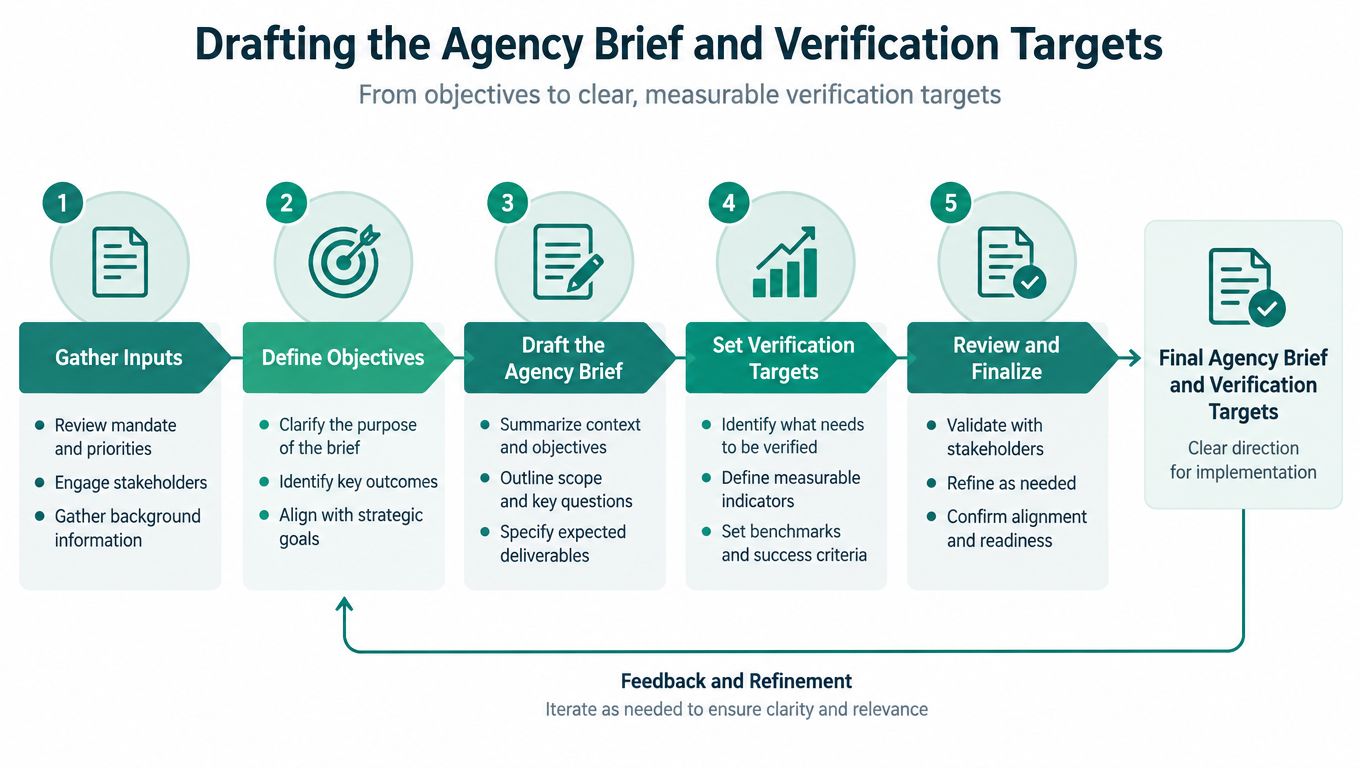
A strong agency brief defines the operating system behind revenue, not merely the next campaign. Give vendors enough detail to expose integration risks before you compare proposals or approve a fee structure. The brief should force each candidate to explain how its work will affect data quality, ownership, reporting, and day-to-day execution.
Start with the current-state inventory
List the CRM, marketing automation platform, ecommerce environment, affiliate network or tracking provider, analytics tools, communication channels, consent system, data warehouse, reporting layer, and operational software. For every system, record the owner, critical objects, integration method, direction of updates, known limitations, and retention policy. Poor CRM synchronization creates hidden costs through duplicate records, delayed handoffs, inaccurate attribution, and manual exception work. Require vendors to identify those costs before implementation.
Document the commercial model as well. A merchant running an affiliate program needs different capabilities from a publisher promoting offers, a network reconciling commissions, or an agency operating programs for several brands. The agency must know whether it serves the merchant, program manager, network, or technology stack surrounding the program.
Define the target operating model
Specify the decisions and handoffs the system must support:
- Lead ownership: Which team receives a qualified lead, and what happens when the assigned owner does not act?
- Partner continuity: Which identifiers must remain attached from referral through conversion and commission validation?
- Audience control: Which events qualify, suppress, pause, or re-enter a journey?
- Revenue reporting: Which conversion event counts, which exclusions apply, and how are refunds or cancellations handled?
- Governance: Who can create, approve, publish, pause, and change workflows?
Before implementation, require a proposed architecture, field map, workflow inventory, test plan, risk register, and operating calendar. Ask the agency to state its assumptions, dependencies, and failure conditions in writing. A vendor that hides those details will be difficult to govern after launch.
Set 90-day verification targets
The first 90 days should test operational improvement, not asset volume. Set 90-day verification targets for reductions in person-hours and improvements in retention and win rates. Each target needs a baseline, an owner, a measurement method, and an agreed review date before kickoff.
Use these target categories:
- Data integrity: Fewer duplicate records, fewer unmapped fields, and clear ownership of exceptions.
- Response operations: Faster lead routing, fewer unassigned opportunities, and documented escalation when handoffs fail.
- Deployment efficiency: Less manual work to launch, QA, and report on recurring campaigns.
- Compliance control: Reliable opt-out propagation, bounce suppression, and evidence of permission handling.
- Commercial measurement: A defined connection between automation participation and pipeline, purchases, retention, or partner value.
- Adoption: Sales, marketing, affiliate, and client-service teams using workflows correctly without constant agency intervention.
Make the contract reflect verification
Tie payment milestones and renewal decisions to accepted deliverables, documented tests, operating baselines, and agreed reporting. The agreement should define access rights, data ownership, security responsibilities, subcontractors, change control, incident response, and exit assistance. Without these terms, the business can pay for activity while retaining little control over the system.
Marketing automation spending continues to expand among large organizations. Adobe's 2025 survey reports that 75% of B2B marketing leaders expected to increase marketing technology spend, while 58% expected to increase spending on agencies and consultants, as shown in Adobe's State of Marketing Automation report. Larger budgets increase the need for accountable delivery and accurate measurement.
Score vendors on integration evidence, operating-model capability, privacy controls, attribution design, documentation, and internal enablement. Creative quality belongs in the evaluation, but it should not outweigh the agency's ability to preserve revenue data accuracy and keep workflows safe.
Use the technical brief and 90-day verification framework above to test each candidate, then compare agencies, networks, and platforms side by side on Affiliate Landscape before committing.
Ready to explore the affiliate landscape?
Discover networks, tools, and opportunities in our directory.
Explore Directory